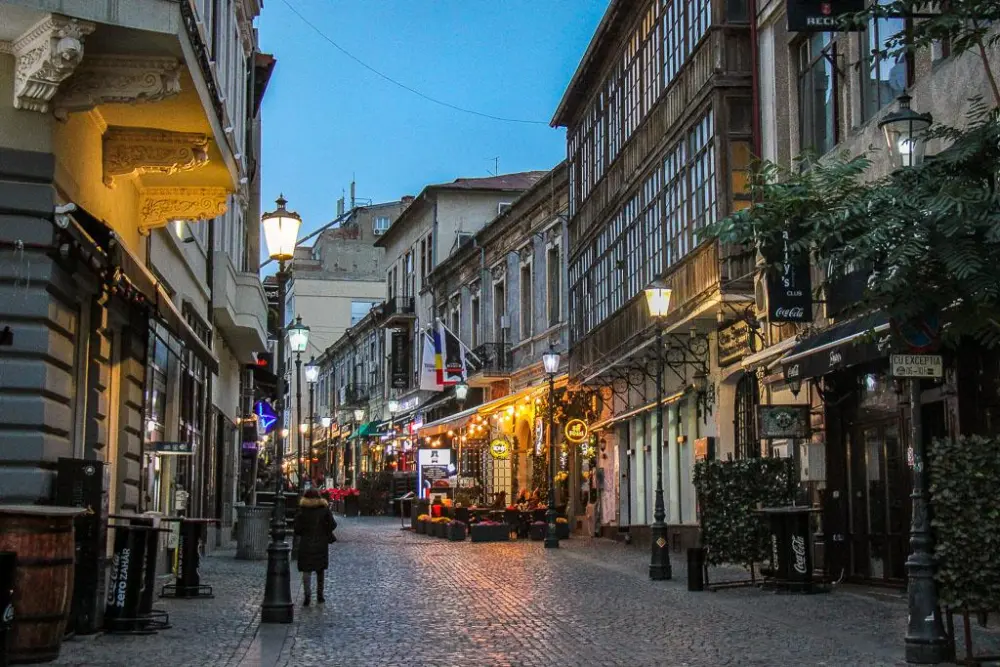
Historic buildings in Bucharest
Bucharest has a long and complex history that reflects the development of Romania itself. The city was first mentioned in a document from 1459 issued by the ruler Vlad III Dracula, who used it as a fortress to defend the region of Wallachia. Over the centuries, Bucharest grew into an important political, economic, and cultural center, becoming the capital of Romania in 1862 after the unification of the Romanian principalities. During the late 19th and early 20th centuries, the city developed rapidly and earned the nickname “Little Paris” because of its elegant architecture and lively cultural life. Despite damage from wars, earthquakes, and large-scale demolitions during the communist era under Nicolae Ceaușescu, Bucharest remains today the largest city in Romania and an important cultural and political center.
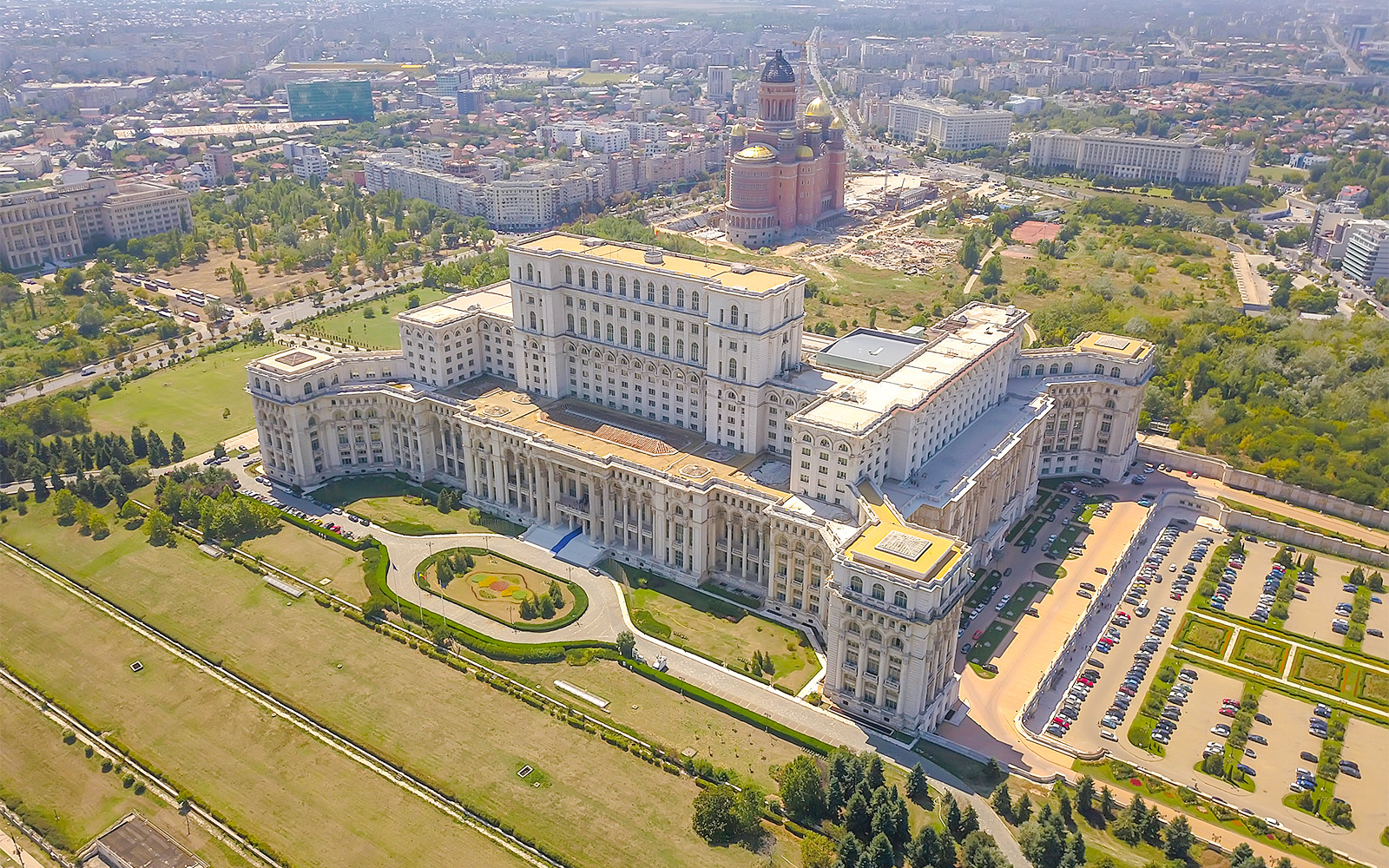
- Palace of Parliament was built during the dictatorship of Nicolae Ceaușescu in the 1980s as part of a massive plan to create a new political-administrative center for the country. Constructed despite severe economic hardship, the building was intended to house all major state institutions and to serve as a highly secure residence capable of withstanding earthquakes and even nuclear attacks. Its construction required enormous resources and the work of over 100,000 people, while large parts of the city, including thousands of homes, churches, and historic buildings, were demolished. Today, although it began as a symbol of communist power, the building houses Romania’s Parliament and other democratic institutions, becoming a powerful reminder of the country’s complex history. Today, the Palace of Parliament is the second-largest administrative building for civil use, behind the Pentagon, and the heaviest building in the world, weighing approximately 4.1 million tonnes.
Address: Strada Izvor 2-4, București
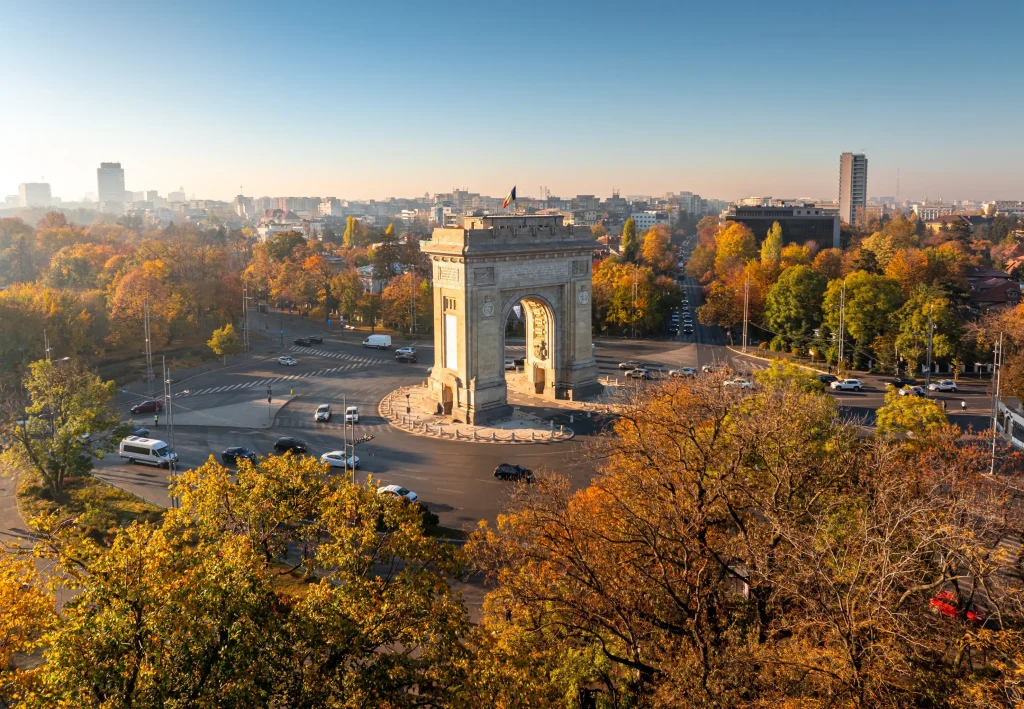
- The Arch of Triumph is a monument built following the project of the architect Petre Antonescu to celebrate Romania’s victory in World War I and the creation of Greater Romania in 1918.
Address: Piața Arcul de Triumf, Sector 1, București
- In central Bucharest beside the former Royal Palace and the Central University Library (with King Carol I’s equestrian statue), the Romanian Athenaeum, laid down on 26 October 1886 atop the foundations of a planned riding school that inspired its circular dome, opened in February 1888 with Alexandru Odobescu’s lecture “The Romanian Athenaeum and Circular Domed Buildings”, becoming Romania’s emblematic concert hall and a beacon of European culture.
Address: Strada Benjamin Franklin 1-3, București
Bucharest has a series of museums worth visiting: The National Museum of Art, Grigore Antipa National Museum of National History, The National Military Museum, The National Museum of the Romanian Peasant, National Museum of the "Dimitrie Gusti" Village, The Museum of National Bank of Romania.
Relaxation
- Therme is Europe's largest wellness and relaxation center. It is also home to Romania's largest botanical garden with over 800k plants, including 1500 palm trees, orchids and other unique species. It's the perfect getaway for a hot day of summer.
- Parks: Cișmigiu Gardens, Herăstrău, Carol I, Tineretului.
- Night life: Old Town.